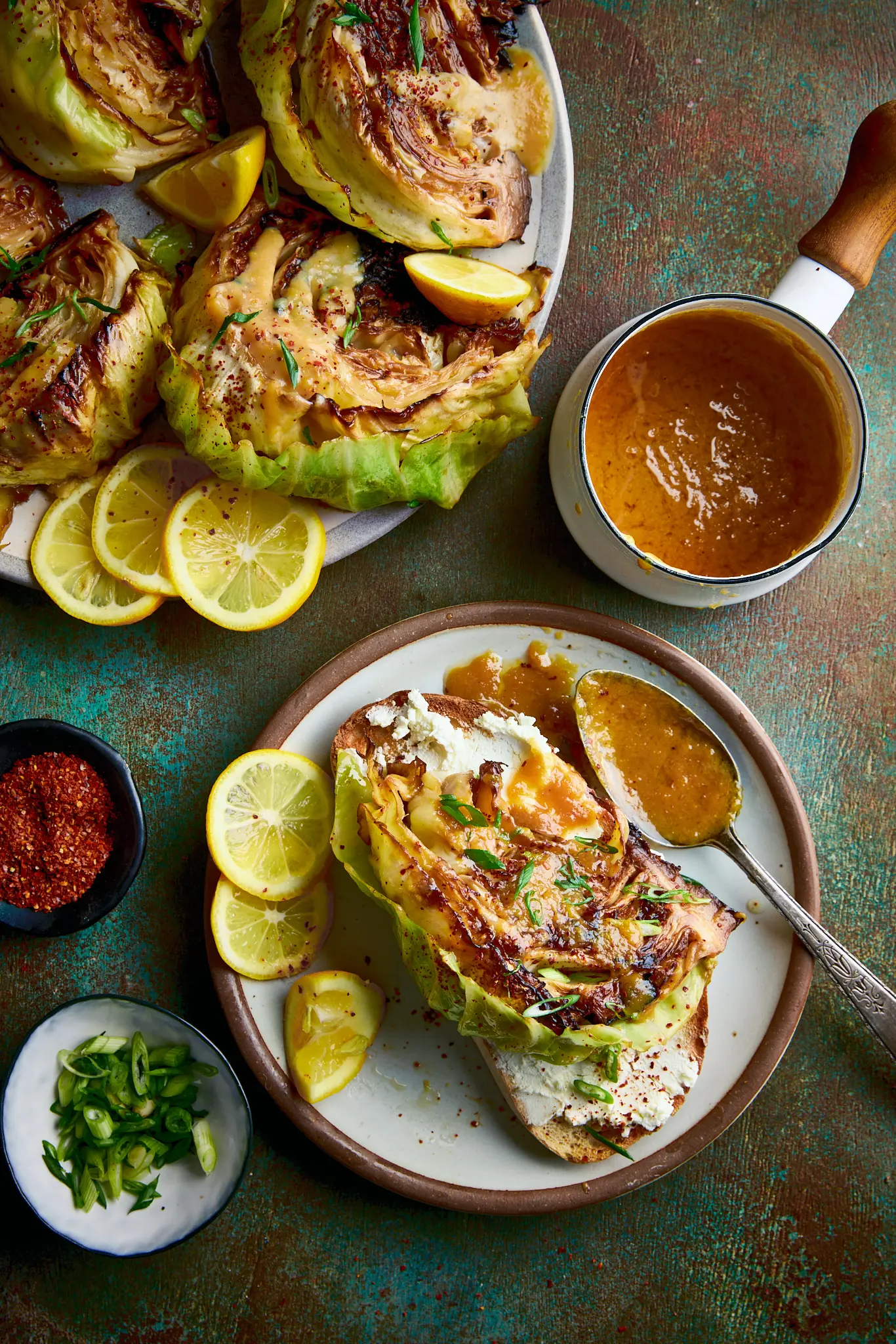
Is 2026 the year of the cabbage? It’s too early to tell, but I’ve heard the phrase “cabbage-core” more than once and not in jest. For once we might actually be ahead of a trend (albeit accidentally) because we’ve been singing the praises of cabbage for years. It’s affordable, it’s chock full of vitamins and fiber, and most importantly, it’s delicious. Let’s make some roasted cabbage.

We’re not mad that cabbage is throwing off its reputation as “peasant food”, but to our minds, peasant food is not an insult. Some of the best dishes in the world come from the most humble of origins. Coq au Vin was a way to turn an old, tough rooster into a tender stew by braising it in cheap red wine. Hell, lobster was once called the “cockroach of the sea”, fed to prisoners and even used as fertilizer. Cabbage hasn’t quite climbed to that rung on the culinary social ladder yet (although it can only be a matter of time before Grand Central Terminal opens a luxury “Cabbage Bar”), but the vegetable has certainly come a long way.
Like many maligned ingredients, the problem isn’t them, it’s you. Well, us: the cooks. If you over-cook any cruciferous vegetable (like broccoli, cabbage and Brussels sprouts), especially by boiling, you’re going to release high levels of sulfur-containing compounds called glucosinolates. When these combine with an enzyme called myrosinase, it results in a pungent, rotten-egg aroma. Delightful!
But treat those vegetables with respect, by searing or roasting them, and they’ll reward you with caramelized edges and tender centers.
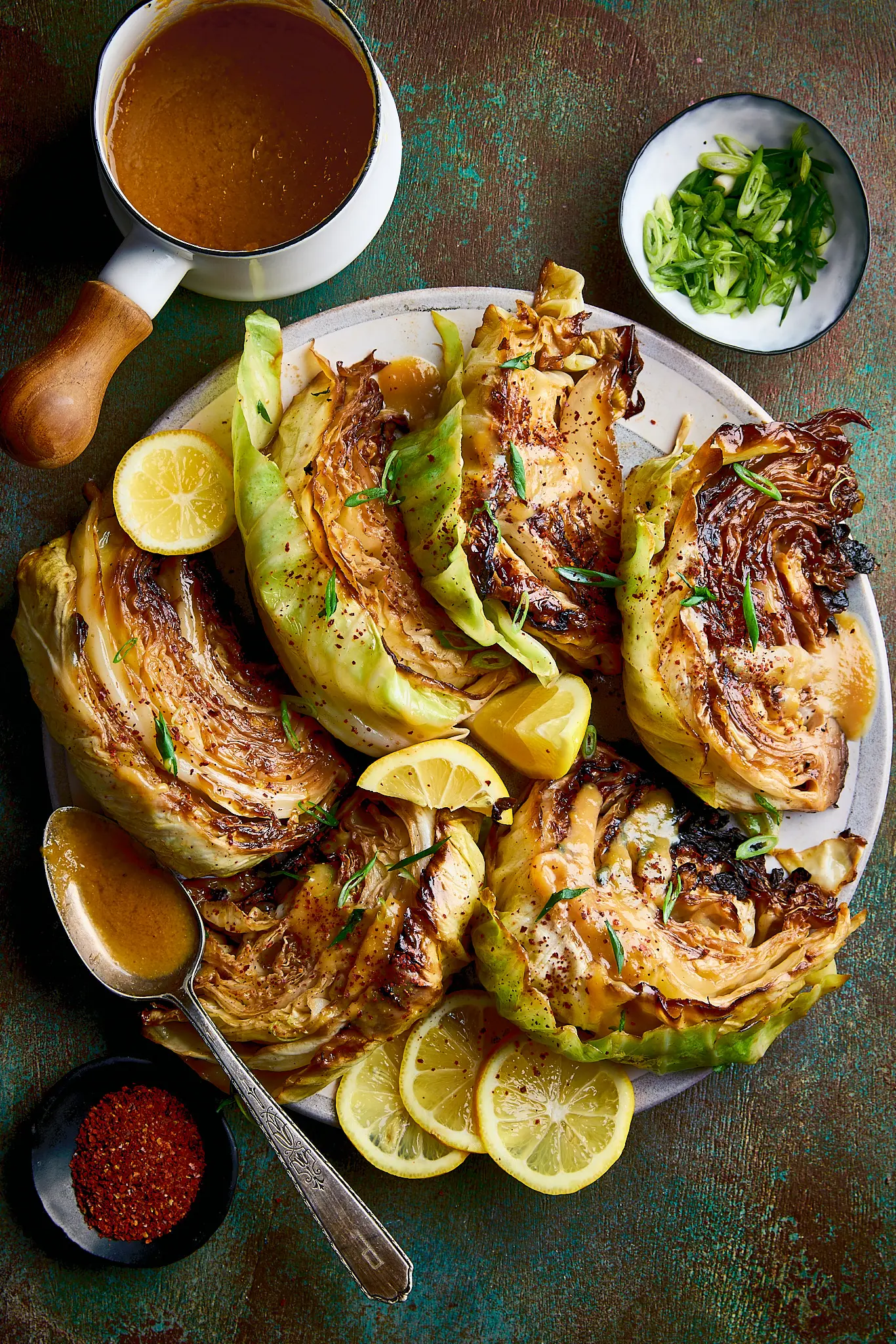
For those of you who have bought our Ultimate Dutch Oven Cookbook (and if you did, thank you!), you may remember the Miso-Braised Charred Cabbage recipe.
This roasted cabbage differs in a few key ways. The inspiration came from Justine Dioron (of the wonderful Justine Snacks), who makes a version with tahini and mint. I love her idea of cooking the cabbage with a good drizzle of vinegar. Vinegar mellows as it cooks, but still infuses the cabbage with some perkiness in the form of acid. More acid from the lemon at the end also helps balance the buttery richness.
Speaking of buttery deliciousness, let’s talk about the miso-butter-lemon situation that soaks into the bread the cabbage sits on. That combination is addictive. Of course you don’t have to serve it on bread. It’s great as a side dish for grilled chicken or pan-seared salmon, where the sauce can do double duty drizzled over some protein.
Types of cabbage and which to use
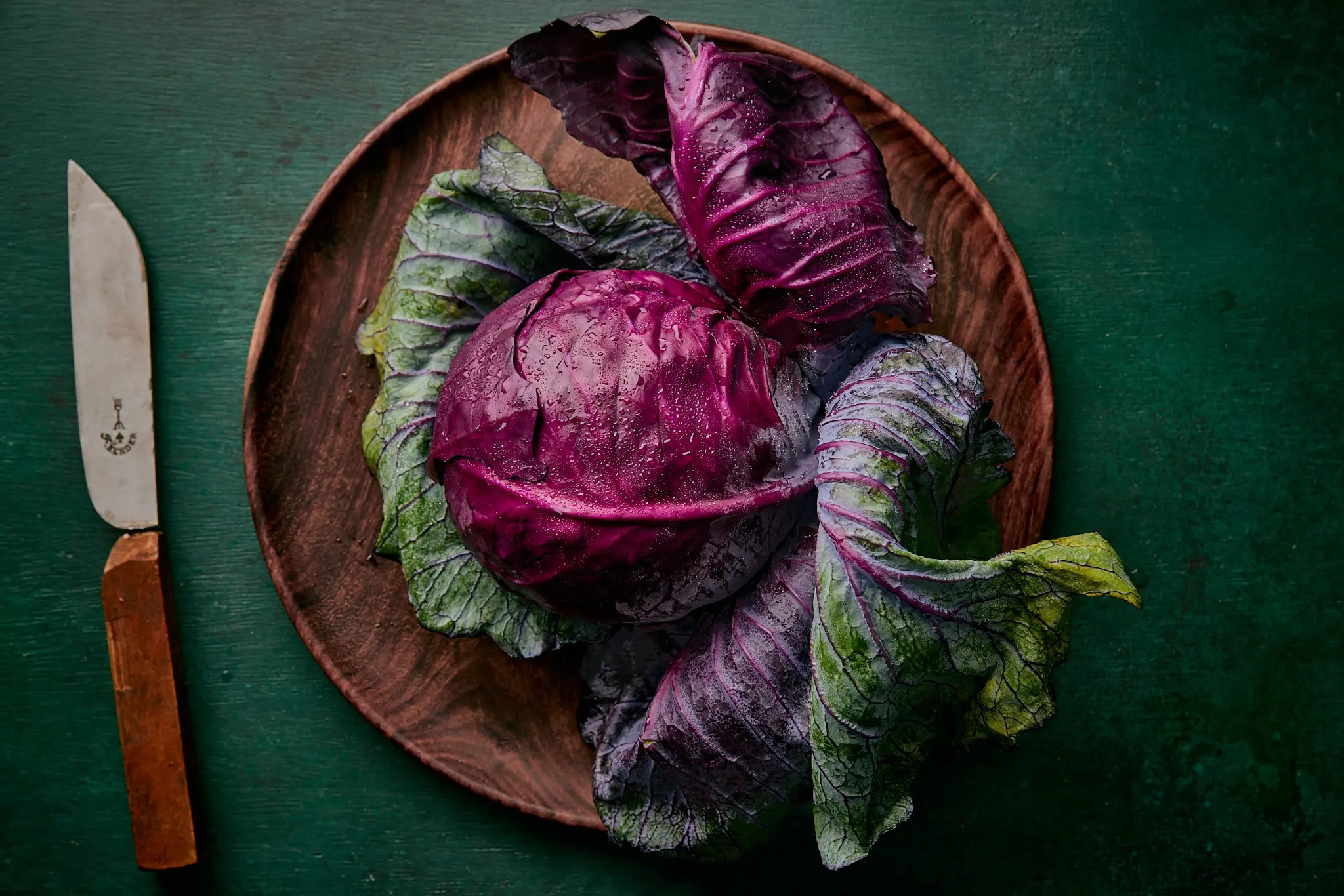
There are a wide variety of cabbages available at even the most basic grocery stores. Plain green and red cabbages are the most common, and are somewhat interchangeable in most recipes. Both can be eaten raw, and are delicious sliced thin in salads and slaws. The gorgeous, deep color of red (sometimes called purple) cabbage will leach into sauces and dressings, so be prepared for that.
This recipe would work with a savoy cabbage, but don’t try to use napa. It has too much water and would turn soupy.
How to make meltingly tender roasted cabbage
One of the best things about cabbage is its versatility. When raw, it has a crisp, sharp bite, but cook it down, especially slowly with a little bit of fat, and it turns tender and supple (like you). Caramelizing also adds a surprising amount of sweetness, which is why we sear them in a pan before roasting.
Start by removing any rough or limp outer leaves, and just trim the end off the bottom of the core if it’s dry (but don’t cut the core off, you’ll need it to keep the leaves together). Cut the cabbage in half, straight through the core, then again to quarter it, then once more to create eight wedges. Season both sides of the wedges with kosher salt and black pepper.
Set a large, oven-safe skillet over medium-high heat and add the olive oil. You want enough to coat the bottom of the skillet. When the oil is shimmering, add the cabbage wedges and arrange them so the cut sides are flat against the skillet (you’ll probably have to work in two batches unless your pan is enormous). Let the cabbage sear on one side until it’s nicely golden, then flip and brown the other side, about 4 to 5 minutes per side. If the pan looks dry, add a little more olive oil, as needed.
When all the wedges are browned, arrange them as best you can in the pan. Drizzle them with vinegar and transfer them to a 400ºF oven, to roast for about 30 minutes. You want the wedges to be tender all the way through.
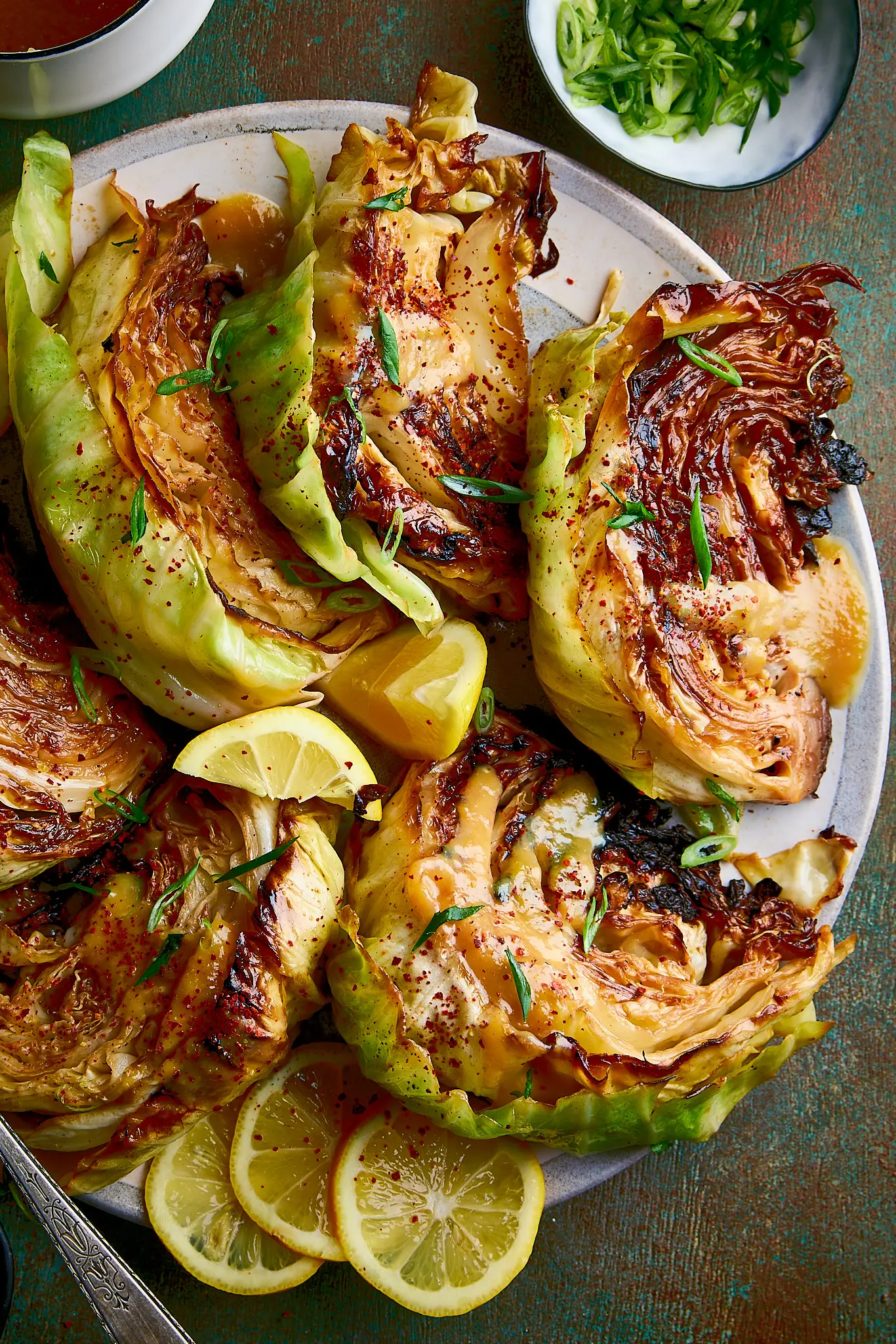
While the cabbage is roasting, add the butter, miso, honey, and lemon zest to a small skillet or saucepan. Set it over medium-low heat and stir as the butter melts until it’s all combined. Allow it to simmer for a minute or two, stirring often and then turn it off and set it aside until the cabbage is ready.
When cabbage is done remove the pan from the oven. Toast the bread until golden, then while hot, rub the cut garlic clove gently over one side of each piece of toast. We enjoyed a layer of fresh goat cheese (chèvre) on the toast but it’s optional.
Top each piece of toast with a wedge of roasted cabbage, then spoon over about a tablespoon of the warm miso-butter. Squeeze a little lemon juice over the wedges and finish with a sprinkle of thinly sliced scallions. Serve them while warm with any extra sauce and more lemon for squeezing, if desired.
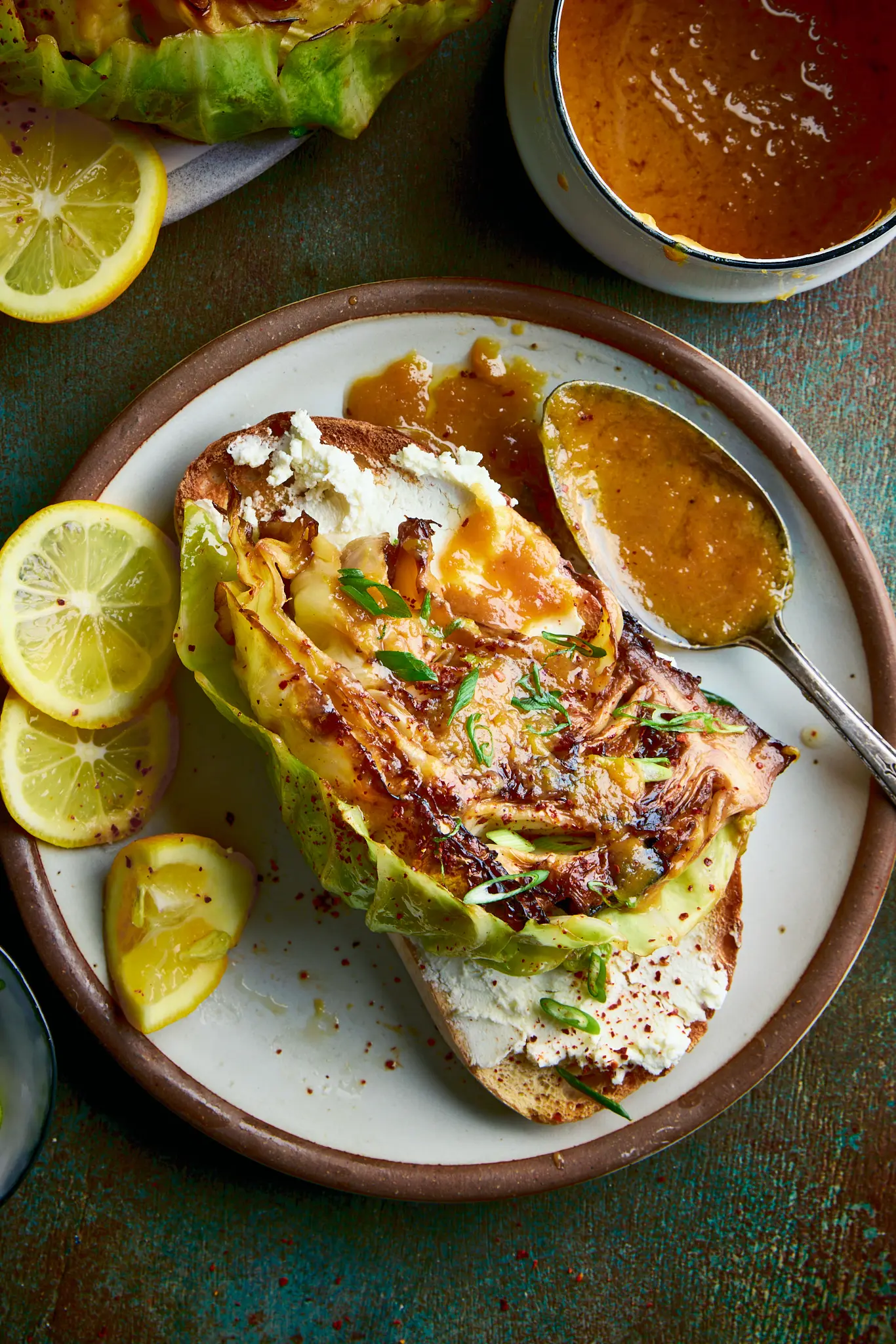

Miso-Butter Roasted Cabbage on Garlic Toast
Equipment
- 1 large, oven-safe skillet
- 1 small saucepan or skillet
Ingredients
For the Cabbage:
- 1 large head of green cabbage regular, savoy or hispi
- Kosher salt and freshly ground black pepper
- 3 tablespoons extra-virgin olive oil plus more as needed
- 1/4 cup white wine vinegar
For the Miso-Butter:
- 8 tablespoons unsalted butter (1 stick)
- 1/4 cup white (Shiro) miso
- 2 tablespoons honey or maple syrup
- Finely grated zest from 1 small lemon (cut lemon in wedges for squeezing)
For the Bread and Garnish:
- 8 slices sourdough or country bread for serving (or 4 slices cut in half if loaf is very large)
- 1 large clove garlic cut in half lengthwise
- 4 oz fresh goat cheese (chèvre) , optional
- 2 scallions finely sliced, on a bias
Instructions
Make the Cabbage:
- Set a rack in the center of the oven and preheat to 400°F.
- Cut the cabbage in half, straight through the core, then half again twice, keeping the core intact, until you have eight wedges. Season both sides of the wedges with kosher salt and black pepper.
- Set a large oven-safe skillet over medium-high heat and add olive oil. When hot, sear the cabbage wedges until well browned on both sides, about 4-5 minutes per side. Work in batches as needed.
- When all the wedges are browned, arrange them as best you can in the pan. Drizzle them with vinegar and transfer them to the oven to roast for about 30 minutes, or until the wedges are tender all the way through.
Make the Miso-Butter:
- While the cabbage is roasting, add the butter, miso, honey, and lemon zest to a small skillet or saucepan. Set it over medium-low heat and stir as the butter melts until it’s all combined. Allow it to simmer for a minute or two, stirring often and then turn it off and set it aside until the cabbage is ready.
Assemble the Toast:
- When cabbage is done, remove from the oven. Toast the bread until golden, then while hot, rub the garlic clove gently over one side of each piece of toast. If you want, spread a thin layer of goat cheese over the toast.
- Top each piece of toast with a wedge of cabbage, then spoon over about a tablespoon of the warm miso-butter sauce. Squeeze a little lemon juice over the wedges and finish with a sprinkle of scallions. Serve warm.